DAVESTORYTELLING LLP

Vietnam’s Quiet Entry in India: The Rise of a New Challenger
The next wave of global brands may come from places we are only beginning to notice.
DAVE DIVE
5/7/20263 min read
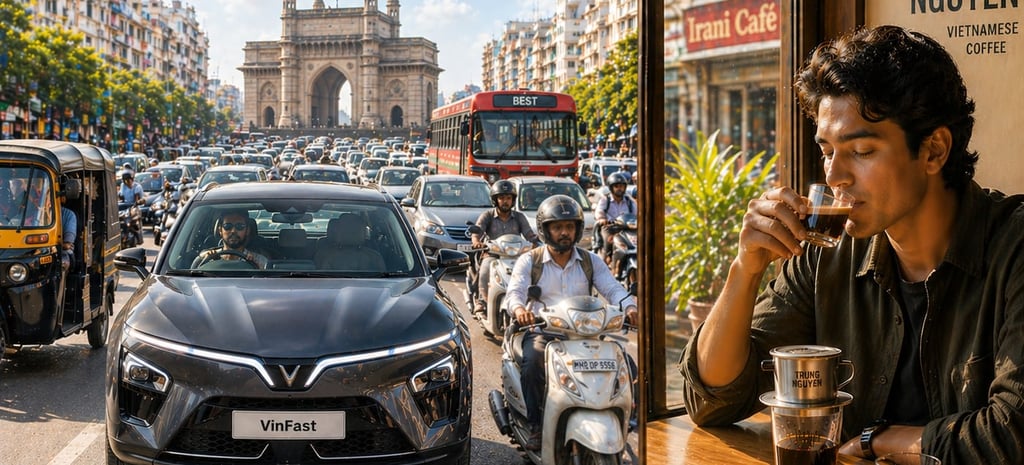
The next electric car you might see on Indian roads may not be from Tesla. It could be from Vietnam. And that’s just the beginning. From electric vehicles to electronics and manufacturing, Vietnamese companies are quietly entering India — and most Indians don’t even realise it. But this didn’t happen overnight.
From War-Torn Economy to Export Powerhouse
Just a few decades ago, Vietnam was emerging from the devastation of the Vietnam War. Its economy was isolated, heavily centralised, and struggling to rebuild. The turning point came in 1986, with the launch of the Doi Moi reforms — a sweeping shift from a state-controlled system to a socialist-oriented market economy. These reforms opened Vietnam to global trade, and private enterprise.
Over the next three decades - Vietnam did something remarkable:
Become a global manufacturing hub, integrated deeply into global supply chains, and signed multiple trade agreements. It positioned itself as an alternative to China for global companies.
Today, Vietnam has risen to eighteenth position among world’s top exporters as its trade nears one trillion dollar milestone. It is also one of Asia’s fastest-growing economies.
The Policy Push: Building a Startup and Manufacturing Hub
Vietnam’s rise is not accidental — it is policy-driven. The government has aggressively focused on:
Ease of doing business improvements
Tax incentives for foreign investors
Special economic zones
Support for startups and innovation ecosystems
Cities like Ho Chi Minh City and Hanoi are emerging as startup hubs, attracting venture capital and nurturing local tech companies. Vietnam has also invested heavily in:
Electronics manufacturing
Renewable energy
And, industrial infrastructure
This combination of low-cost manufacturing plus improving innovation capacity is now creating companies that are ready to expand globally.
But, why India?
For Vietnamese companies, India represents a massive opportunity:
A rapidly growing consumer market, increasing demand for electric vehicles and electronics, a large talent pool, strong government push for manufacturing and clean energy and at the same time, India offers something Vietnam increasingly needs — scale.
This makes India not just a market, but a strategic partner.
Vietnamese Brands are now Entering India
VinFast: The Bold Bet on Electric Vehicles
The most high-profile entry is VinFast, Vietnam’s electric vehicle company backed by the Vingroup. VinFast is planning a major push into India’s EV market, including manufacturing investments.
To understand its ambition, consider this:
Tesla delivered over 1.8 million vehicles globally in 2023. VinFast, while much smaller, is rapidly expanding internationally with a focus on markets like the US, Europe, and now India. VinFast is not trying to beat Tesla overnight. Instead, it is positioning itself as a fast-moving, globally ambitious challenger — leveraging cost advantages and speed.
FPT Corporation:
The second one in the list is Tech and IT Services Expansion by FPT Corporation. FPT is one of Vietnam’s largest technology companies and has been expanding its footprint in India. It operates in IT services, digital transformation, AI and software solutions. As global companies diversify tech partnerships beyond traditional hubs, firms like FPT are stepping in.
Viettel: A Potential Telecom Player
The third one is a potential telecom player, Viettel. While not fully established in India yet, Viettel — Vietnam’s telecom giant — has global ambitions and operates in multiple countries. If it enters India, it could bring competitive pricing, infrastructure expertise and experience in emerging markets.
Trung Nguyên Legend: Cultural and Consumer Brands
Coffee is another major brand peeping into India. Vietnam is the world’s second-largest coffee exporter, and brands like Trung Nguyên, pronounced as Troom Nween, are expanding globally.
India’s growing café culture makes it a natural market for Vietnamese coffee brands to explore. You may too try it here: https://amzn.to/4fCZ5my.
The Bigger Trend: Asia Expanding Into Asia
What we are witnessing is part of a larger shift. For years, globalisation meant companies moving from the West into emerging markets. Now, a new pattern is emerging: Asian companies expanding into other Asian markets.
Regional supply chains becoming stronger and emerging economies becoming both producers and consumers. Vietnam is at the center of this shift.
What This Means for India
Vietnam’s entry in India creates both opportunities and competition. Opportunities such as
collaboration in manufacturing and technology, increased investment flows and stronger regional trade ties.
But, there are challenges too, such as competition for Indian startups and manufacturers, pressure on pricing and efficiency, and the need for faster innovation.
Conclusion: A Quiet but Powerful Shift
Vietnam’s rise is one of the most important economic stories of the last three decades. And now, its companies are stepping beyond exports, into global markets like India.
The entry may be quiet today. But it is strategic, deliberate, and growing.
Because the next wave of global brands may not come from Silicon Valley or Europe. They may come from places we are only beginning to notice. Like Vietnam.