DAVESTORYTELLING LLP

The “China Exit” Myth: Why Big Tech Still Can’t Quit Beijing
China is not fading--it’s thriving, especially in manufacturing, AI, and data centres.
DAVE DIVE
7/7/20262 min read
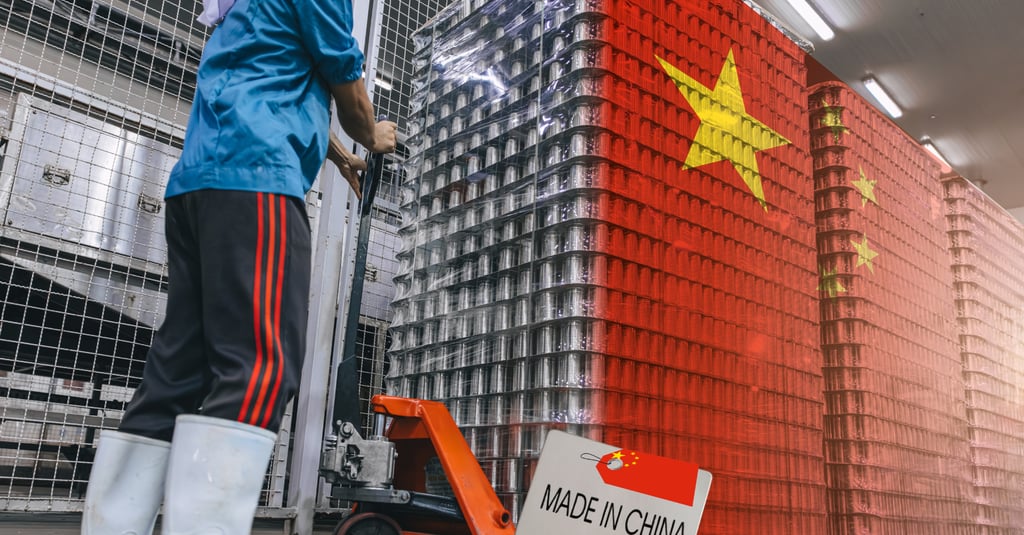
For years, headlines have screamed that global giants are “leaving China.” Apple assembling iPhones in India, Dell and HP shifting laptops to Vietnam, Google exploring alternatives in Malaysia, and governments from Washington to Tokyo urging “de-risking.” Yet when you look at the numbers, the story is far more complex. China is not fading—it’s thriving, especially in manufacturing, AI, and data centers.
The Noise vs. Numbers Paradox
Countries like India, Vietnam, and Mexico are loudly positioning themselves as the “next China.” Apple has indeed expanded iPhone assembly in India, while Google and Dell have moved some production to Vietnam. But here’s the catch: China still produces over 28% of global manufacturing output, dwarfing competitors. Even when Apple builds in India, critical components—chips, displays, batteries—still come from China.
In May 2026, China’s exports surged to $376.78 billion, a 19.4% year-on-year increase. The growth wasn’t in cheap toys or textiles—it was in electronic integrated circuits (up nearly 90%), servers and data processing equipment, and industrial automation machinery. That’s not retreat; that’s acceleration.
The AI & Data Center Supercycle
China is pouring money into the infrastructure of the future. Internet giants like Alibaba Cloud, Tencent Cloud, Baidu AI Cloud, and Huawei Cloud are investing $70 billion in data centers between 2025 and 2026.
Power demand: Data center electricity capacity is projected to hit 30 GW in 2026, a 30% jump.
AI spending: Enterprise AI investment is forecast to grow from $1.4 billion to $77 billion in five years—a staggering 94% CAGR.
Domestic innovation: Platforms like DeepSeek, China’s answer to ChatGPT, have seen hundreds of millions of downloads, proving strong local adoption.
This is not a country being abandoned—it’s a country building the backbone of the next digital era.
Big Companies Still Betting on China
Despite diversification, the world’s biggest names remain deeply tied to China:
Apple: Foxconn and Luxshare factories in Shenzhen and Zhengzhou still churn out millions of iPhones.
Tesla: Gigafactory Shanghai is Tesla’s largest export hub, producing hundreds of thousands of EVs annually.
Microsoft & Amazon: Both operate large-scale cloud and AI research centers in China.
Alibaba, Tencent, ByteDance: Expanding AI services and global reach while dominating domestic markets.
Huawei: Despite sanctions, leads in 5G infrastructure and AI chips.
Nvidia & Intel: Though restricted, still see China as a critical market for GPUs and semiconductors.
Starbucks, Nike, BMW: Expanding retail and automotive footprints in China’s massive consumer market.
Why Companies Can’t Just “Exit China”
Scale & ecosystem: China’s supply chain depth—from raw materials to advanced robotics—is unmatched.
Infrastructure: Ports, logistics, and skilled labor make China uniquely efficient.
Domestic market: With 1.4 billion consumers, companies like Starbucks, Nike, and BMW continue expanding aggressively.
Even when firms diversify, they rarely abandon China. Instead, they adopt a “China Plus One” strategy—adding India, Vietnam, or Mexico, but keeping China as the core.
A Fun Analogy: Musical Chairs
Think of global manufacturing as a game of musical chairs. India, Vietnam, and Mexico are playing loudly, hoping to grab the spotlight. But when the music stops, the biggest chair is still occupied by China. The numbers don’t lie—exports are surging, AI investments are exploding, and global giants still line up to manufacture and sell in China.
Conclusion
The narrative of “companies fleeing China” makes for catchy headlines, but the reality is more nuanced. Diversification is real, but China remains the backbone of global manufacturing and a rising AI superpower. The “China exit” story is more noise than fact—companies may hedge, but they aren’t abandoning the world’s most efficient production base.